
Define the process, air duty and complete package
Automotive Air Compressor Malaysia
Automotive Air Compressor Malaysia. Compare MAC3 equipment using the busiest combination of workshop tools, the required pressure and the shift pattern. Keep paint-finishing air-quality requirements separate from general workshop air when defining the package.
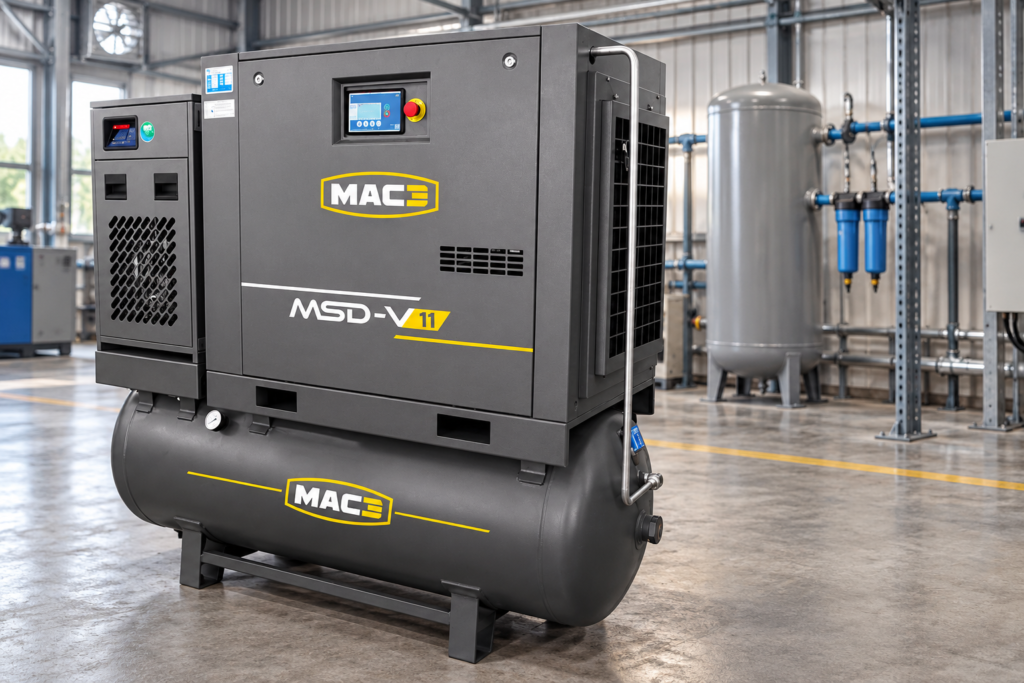
Choosing an automotive air compressor in Malaysia
Begin with the equipment connected to the air supply. A small service garage, a tyre centre and a body shop can have very different working patterns. Record the air requirement and pressure specified for each tool or machine, then describe the combinations operating during the busiest part of the day.
Include planned expansion, such as an additional bay, another technician or a new process. Keep confirmed demand separate from possible future work. This helps the proposal address today’s duty while making any allowance for expansion visible.
Garage tools and tyre-shop demand
List impact tools, inflators, tyre-changing equipment and other pneumatic devices using the system. State their models where possible. Equipment used briefly between jobs should be distinguished from tools operating for longer periods, and simultaneous use should be described rather than assumed.
If workshop staff report low pressure, explain when it occurs and which equipment is running. Include the current compressor’s nameplate and operating settings. The enquiry may need to consider the wider air system as well as the compressor, so avoid treating a larger motor as the automatic answer.
Body-shop and paint-finishing requirements
Provide the requirements specified by the spray-equipment and coating suppliers. Identify the air outlets serving paint work separately from general workshop tools. Ask how drying, filtration and distribution are included in the proposed package, and request supporting performance information for that arrangement.
A compressor photograph or an oil-free label alone does not establish the air quality at a spray gun. Review the air-treatment range and make the process requirement clear before comparing packages. Equipment selection should follow the actual application specification.
Compare compressor types for the working pattern
Explore the reciprocating compressor range and screw compressor range. Discuss the expected running hours, demand variation, available electrical supply and installation space when reviewing alternatives.
MAC3 publishes 5–15 kW variable-speed range information. It is a product-family reference, not a universal workshop-size recommendation. Request a model-specific comparison showing the proposed airflow, pressure and supplied configuration for your duty.
Use our air compressor size comparison guide, covering 7.5–315 kW to compare capacity pages after documenting your equipment demand. The guide supports comparison; the final model must be matched to the required airflow and pressure rather than selected from motor power alone.
Workshop installation and daily operation
Describe the proposed compressor position, available space, ventilation arrangement and access for maintenance. Share the site’s electrical supply information with the supplier and the responsible installer. Ask for the installation requirements applicable to the offered equipment before agreeing the scope of work.
Include the air receiver, dryer, filters, drains and distribution work in the package discussion where required. Clarify who supplies and installs each item. An equipment-only quotation and a complete installed package should be compared as different scopes.
Automotive compressor quotation checklist
- Business type, number of working bays and Malaysia site location.
- Connected equipment models, air demand and operating pressure.
- Tools running together and expected daily working hours.
- Paint-finishing or other process air-quality requirements.
- Existing compressor details, available electrical supply and installation space.
- Requested accessories, installation, delivery and handover scope.
Ask for RM pricing with applicable taxes, quotation validity, lead time and written warranty terms. Identify optional items separately so quotations can be compared on the same basis. Confirm the proposed model consistently across the technical and commercial documents.
Maintenance and workshop support
Agree how routine maintenance, consumables and replacement-parts enquiries will be handled. Keep the compressor’s model and serial information available to the workshop team. See our maintenance services, compressor repair enquiries and spare-parts support pages.
Automotive workshop questions
Can I choose a compressor by the number of bays?
Bay count is useful background, but connected equipment and simultaneous demand determine the enquiry. Two workshops with the same number of bays may use different tools and processes.
Should general workshop air and paint air use the same treatment?
Provide both sets of requirements and ask the supplier to explain the proposed arrangement. Confirm the documented treatment performance for each process rather than assuming one package covers every outlet.
Request an automotive air compressor Malaysia quotation
Call +60 12 275 7317 or send your workshop requirements to Vortex Compressors on WhatsApp. Include your location, equipment schedule and preferred timing to start a focused selection discussion.
Automotive air compressor duty worksheet
Prepare one equipment schedule for the whole workshop before comparing proposals. Include the tools used by technicians, air-consuming workshop machines and any finishing process. Give each item a reference so the supplier can connect a question or assumption to the correct equipment. Where the workshop has several departments, identify which outlets and machines belong to each department.
| Worksheet field | What to enter | Useful supporting record |
|---|---|---|
| Workshop activity | Mechanical service, tyres, body repair, paint work or production | Current services and planned additions |
| Connected equipment | Make, model and quantity | Nameplate or equipment manual |
| Air requirement | Airflow, units and specified operating pressure | Current supplier documentation |
| Simultaneous operation | Tools and machines used during the busiest working combination | Workshop supervisor’s schedule |
| Process air quality | Requirements for the relevant outlets | Spray-equipment or process specification |
| Installation | Available space, electrical supply and distribution arrangement | Site information for the responsible installer |
| Package scope | Compressor, treatment, receiver, connections and project responsibilities | Itemised written quotation |
Retain the original equipment requirements when making conversions or preparing a summary. A motor rating, tank size or workshop floor area should not be substituted for a documented airflow requirement. If the supplier asks a follow-up question, update the same worksheet rather than keeping several conflicting versions of the duty in separate messages.
7 easy automotive air compressor purchasing checks
- Define the workshop: describe the services, working bays and operating hours.
- List the connected equipment: obtain its airflow and pressure requirements.
- Identify overlapping work: describe the busiest realistic combination.
- Specify process air: provide the treatment requirements for paint or other sensitive operations.
- Review the location: confirm the offered equipment’s installation and maintenance-access requirements.
- Compare the complete package: separate included equipment, options and installation responsibilities.
- Retain the records: keep the model details, warranty terms and service instructions together.
Use these checks with the workshop manager and the person responsible for installation. They help organise a purchasing decision but do not approve a specific compressor or installation. Resolve the technical details with the relevant equipment suppliers before treating the proposal as ready for acceptance.
Automotive air compressor example: a mechanical service garage
Imagine a garage whose technicians use pneumatic tools at several workstations. The useful information is the exact tool list and the pattern of overlapping work. Describe the equipment used during a typical job and the combination used when the workshop is busiest. Include any machines connected to the same supply.
If the garage is replacing an existing machine, provide its nameplate and current settings. Explain whether the requirement has changed because of additional staff, longer working hours or different equipment. The replacement enquiry should address the current operation rather than simply repeat the capacity label on the old compressor.
Automotive air compressor example: a tyre centre
A tyre centre should identify the pneumatic functions and requirements of its actual equipment. Include tyre-changing machinery, inflators and handheld tools as applicable, with their manufacturer references. State which operations run together and describe seasonal or daily changes in the workload.
Where the business plans another service position, provide that equipment as a separate future scenario. Ask how the proposal addresses the confirmed duty and what assumptions apply to the additional work. This makes expansion planning clearer than requesting an undefined percentage of spare capacity without explaining how it will be used.
Automotive air compressor example: a body and paint shop
Separate general workshop tools from the air requirements for finishing work. Provide the spray-equipment specification and the process requirements relevant to the work being quoted. Identify the outlets and operating combinations so the proposed treatment and supply arrangement can be reviewed for the intended use.
Ask the supplier to explain what is included between the compressor and the relevant point of use. Dryers, filters, drains and distribution responsibilities should be stated where they form part of the proposal. A product-family image is useful for identifying equipment, but it does not establish the delivered air quality or suitability of a complete paint process.
Compare automotive air compressor proposals consistently
Begin with the proposed model and its documented working point. Compare delivered airflow and pressure together, and keep the quoted configuration consistent across the datasheet and commercial offer. Where a supplier offers alternatives, request a clear explanation of the differences rather than combining details from several options into one comparison.
| Comparison item | Question for each offer |
|---|---|
| Operating duty | Which workshop schedule and pressure requirement does this proposal address? |
| Compressor | What exact model and configuration are offered? |
| Air treatment | Which equipment and documented performance are included for the specified process? |
| Receiver and distribution | Which items are included, and who reviews and installs the arrangement? |
| Electrical and site work | What does the supplier provide and what remains with the buyer? |
| Delivery and handover | Which responsibilities and timing are stated? |
| Ownership support | What written warranty terms, documents and service arrangements apply? |
Record unanswered questions on the comparison sheet and send them to the relevant supplier. If one proposal excludes treatment equipment or installation work, keep that difference visible. A lower initial total is meaningful only when the business understands the equipment and responsibilities that total covers.
Automotive air compressor installation questions
Share the proposed machine position and available space before the equipment is ordered. Ask for the offered model’s ventilation, clearance and maintenance-access requirements. Provide the available electrical supply information to the supplier and responsible installer, and confirm who will review the complete installation scope.
Describe the route from the delivery point to the proposed position, including access and unloading restrictions. Identify any work needed before the machine arrives and who is responsible for it. Treat connections, distribution changes and equipment handover as explicit project items rather than assumptions attached to a compressor-only price.
Review the air-treatment scope for workshop processes
For every process with a specified air-quality requirement, retain the source document and identify the outlet concerned. Ask the proposal to state the relevant treatment equipment, performance basis and operating conditions. Keep a requirement provided by a process supplier distinct from a general marketing description of clean or dry air.
Ask how the treatment components will be identified for later service and consumables enquiries. Clarify which checks and maintenance instructions accompany the proposed equipment. If the workshop changes its process or working pattern, arrange a review of the requirement instead of assuming that a package selected for an earlier duty remains suitable.
Automotive air compressor replacement observations
When reporting a problem with an existing supply, describe what staff observe without trying to diagnose the cause from a single symptom. Record when the pressure concern occurs, which equipment is operating and whether the workshop has recently added tools or changed shifts. Include available service records and the machine identification.
Share the observations with the responsible service team. The enquiry may involve the compressor, treatment equipment, distribution or working demand, and the appropriate inspection depends on the actual system. Keep replacement purchasing and fault investigation as related discussions so a new machine is not selected around an unresolved assumption.
Daily ownership and service planning
Ask which operating and maintenance documents apply to the supplied compressor and accessories. Agree who will receive the handover information and how model and serial details will be stored. Make the relevant instructions available to the staff responsible for the equipment, including when responsibilities change within the workshop.
Discuss service planning around the business’s operating hours and location. Ask how consumables and replacement parts should be identified, what information is needed when reporting a problem and how support enquiries are handled. Any specific availability or response commitment should be confirmed in writing rather than inferred from a website contact number.
Automotive air compressor quotation questions
Does a larger receiver automatically solve a capacity problem?
Receiver volume is one part of a system description, not a substitute for reviewing the required airflow and working pattern. Provide the current equipment details and the observed issue so the supplier or service team can assess the enquiry. Do not assume a receiver change alone addresses every supply problem.
Can one package cover service tools and spray equipment?
It may be possible to propose a complete arrangement, but the requirements of each process must be identified. Provide the relevant specifications and ask the suppliers to explain how the offered equipment addresses them. A shared compressor does not remove the need to review treatment and distribution at the intended outlets.
Should I choose fixed speed or variable speed from the name alone?
No. Describe demand variation and working hours, then request a model-specific comparison for that duty. Ask the supplier to explain the selection basis and the supplied package. A broad technology description does not establish the most appropriate equipment or a guaranteed saving for an individual workshop.
What information helps when opening a new workshop?
Send the planned services, equipment schedule, expected overlapping work, working hours and site information. Identify which equipment choices are confirmed and which are provisional. Update the enquiry when the final machinery and process specifications become available, before accepting the compressor package.
What should an expansion enquiry include?
Provide the current installation information and the additional equipment’s documented requirements. Explain how the working schedule will change and whether the new work overlaps with existing operations. Ask for the complete revised duty to be reviewed, rather than assuming unused capacity from the old quotation.
Copy this automotive air compressor enquiry outline
Business: workshop activity, Malaysia location, contact person, working hours and requested timing.
Equipment: tool and machine references, air requirements, operating pressures and simultaneous-use schedule.
Processes: finishing or other air-quality specifications and their supporting documents.
Site: current compressor details, available electrical supply, machine position, access and existing distribution.
Quotation: requested compressor, receiver, treatment, accessories, delivery, installation and handover scope.
Send the completed outline through the Vortex Compressors Malaysia contact page or WhatsApp enquiry channel. Include clear equipment-document photographs where available. Mark open questions so the quotation discussion can resolve them instead of relying on assumptions about the workshop’s requirements.
Check an automotive air compressor delivery against the order
Compare the delivered equipment identification with the accepted quotation and model documentation. Check the included accessories against the agreed package list, and record anything that needs clarification. Ask who will explain the controls, operating documents and service-enquiry process during handover.
Keep the final quotation, model and serial details, warranty conditions, treatment-equipment information and service contacts in one workshop equipment record. If installation or a demonstration forms part of the order, check completion against the previously agreed scope. Raise differences with the supplier instead of assuming that a substituted accessory or configuration is equivalent to the accepted proposal.
When ownership responsibilities change, pass the records to the person taking over the equipment. A clear handover helps future enquiries refer to the machine actually supplied and the working arrangement originally reviewed, rather than a general product image or a remembered capacity label.
Discover our products for the automotive industry


Automotive Air Compressor Malaysia: 7 best planning checks
Use these checks to prepare a proposal for garages, tyre centres and body shops. Keep documented requirements separate from assumptions, and ask the offer to identify the exact model and relevant technical information.
Separate mechanical service, tyre equipment, body repair and finishing. List the actual air users in each area.
Record how many technicians and machines use air at the busiest time. Include automatic workshop equipment alongside handheld tools.
Provide the documented consumption and inlet pressure for each tool. Avoid using tool motor power as a substitute for airflow.
Ask the finishing-equipment supplier for the air-quality requirement. Include drying and filtration in the package review.
Show the compressor position and outlet routes. Identify existing hoses, regulators and filters where pressure problems have been reported.
Describe confirmed extra bays, equipment or shifts. Keep possible future additions separate from current demand.
Compare compressor, receiver, dryer, installation and maintenance scope on the same basis. Confirm the exact equipment and delivery terms.
What should the written quotation include?
Ask for the exact equipment, included components, delivery terms, warranty and any installation or service responsibilities. Provide your actual Malaysia site location and required timing. Itemised pricing and stated exclusions help your team compare equivalent offers.
What documents help the enquiry?
Separate mechanical service, tyre equipment, body repair and finishing. List the actual air users in each area. Record how many technicians and machines use air at the busiest time. Include automatic workshop equipment alongside handheld tools. Keep the relevant equipment records and process specifications with the accepted proposal.
For related enquiries, see maintenance and spare-parts support. Manufacturer information is available from MAC3.
Call +60 12-599 9674 or +60 12-275 7317 to discuss your requirements with Vortex Compressors.