
Planning an air receiver tank for a compressed-air system in Malaysia? Send Vortex Compressors your airflow, operating pressure and demand pattern for a system enquiry. Receiver selection involves more than choosing a tank from the compressor motor rating.
On this page — receiver tank guide
Air receiver tank price in Malaysia
Ask for an itemised quotation in Malaysian ringgit identifying receiver volume, pressure rating, construction specification and supplied accessories. Include delivery location, positioning, installation and documentation requirements. Confirm availability, taxes, warranty and lead time in the written offer.
Choose volume from the operating requirement
A receiver stores compressed air and can help accommodate demand fluctuations. The required volume depends on the usable pressure band, the size and duration of demand peaks, and how the compressor responds. A bigger tank cannot provide sustained airflow beyond the compressor’s output indefinitely.
For a short intermittent demand, provide the duration and frequency of each event. For a factory network, record simultaneous machine operation, compressor controls and any pressure drops. These inputs are more useful than a rule based only on kW or HP.
Wet receiver and dry receiver arrangements
A receiver upstream of a dryer and a receiver downstream of treatment serve different positions in the air system. Describe whether stored air must meet a process air-quality requirement and how condensate will be managed. The project team should evaluate the dryer, filters, drains and receiver arrangement together.
See the air-treatment range when discussing moisture control. Dryer capacity should be matched to airflow and actual inlet conditions, including the proposed installation environment.
Pressure rating, documents and Malaysia installation requirements
The proposed tank should have technical documentation identifying its design pressure, capacity, construction specification and supplied safety accessories. Do not treat a product photograph, a supplier’s generic catalogue or an unrelated certification as evidence for the exact receiver offered.
Ask the supplier and competent project team to confirm which DOSH/JKKP requirements apply to the exact tank and installation and to identify the documents and inspection arrangements included in the offer. Certification or approval should be established for the supplied equipment before purchase; this guide makes no blanket compliance claim for an unspecified tank.
Prepare an air receiver enquiry
- Required working pressure and maximum system pressure.
- Compressor free air delivery and control method.
- Peak air demand, event duration and frequency.
- Available floor space, height, access and preferred arrangement.
- Air-quality requirement and location relative to the dryer and filters.
- Drainage, accessories, documentation and installation scope.
Receiver accessories and practical layout
Ask the offer to identify the pressure gauge, relief device, drain and isolation arrangements rather than assuming they are supplied. Provide the intended tank location and access for maintenance. Installation, handling and testing should follow the supplied technical documents and the applicable project requirements.
Compare the complete compressor package
Review the electric screw compressor size guide alongside your receiver enquiry. Ask for the compressor, dryer, filters and tank to be specified as a coordinated system. Existing equipment may be reusable, but pressure rating, flow capacity, condition and documents need to be checked.
Air receiver tank: describe three different demand events
An air receiver tank enquiry should explain the event the stored air must support. Record the connected process, the required pressure, the duration of the event and the frequency with which it occurs. A short fluctuation during a production cycle, a sustained supply deficit and a restriction at one outlet are different situations. The project team needs that distinction before recommending a volume or changing the system arrangement.
For a brief production changeover, describe which tools or machines overlap and how long the overlap lasts. Ask how the proposed air receiver tank works with the compressor’s delivery and control band during that event. The offer should identify the assumptions used and how the tank returns to its normal operating condition. Do not treat the presence of a receiver as proof that any short peak will be handled.
If demand remains above compressor delivery throughout a shift, an air receiver tank cannot create the missing sustained compressor capacity. Explain the length of that operating period and the equipment involved. Ask the technical proposal to assess compressor delivery and controls as well as storage. This prevents a tank purchase being presented as a complete answer to a production requirement that has not been assessed.
If only one outlet loses pressure while other processes remain stable, give that observation to the competent team before increasing air receiver tank volume. Identify the hose, regulator, filters and relevant route to that outlet as part of the assessment scope. A local restriction and a system-wide demand issue should not be assumed to have the same remedy merely because both appear as a pressure complaint.
Air receiver tank quotation: identify the actual vessel
The air receiver tank offer should describe the exact equipment using its manufacturer, model or reference, proposed volume and pressure rating. Ask for the corresponding drawing, dimensions and equipment identification details. Compare the same vessel description across the quotation, technical documents and proposed installation. A generic photograph or a compressor-package image cannot establish the identity of a standalone receiver.
Ask which air receiver tank documents are available for the offered equipment and who confirms the requirements applicable to your Malaysia project. Keep the document list tied to the actual supplied vessel. Where an item is pending or outside the supplier’s scope, record that clearly. This page does not establish a blanket certification or approval claim from a material description, a photograph or a neighbouring product model.
For a replacement air receiver tank, provide photographs of the existing identification plate and the available installation records. Explain why replacement is being considered and which supporting equipment will remain. Ask the supplier and competent project team to identify the assessment, documentation and installation responsibilities. Do not assume that a similar external appearance establishes an equivalent pressure rating, volume or suitability.
Air receiver tank before or after the dryer
When comparing an air receiver tank before or after air treatment, identify the current compressor, dryer, filters and main distribution route. State the process air-quality requirement and the demand event described in the enquiry. Ask the technical proposal to explain the chosen arrangement and the roles of the supporting components. Receiver location should be considered with the system rather than selected from volume alone.
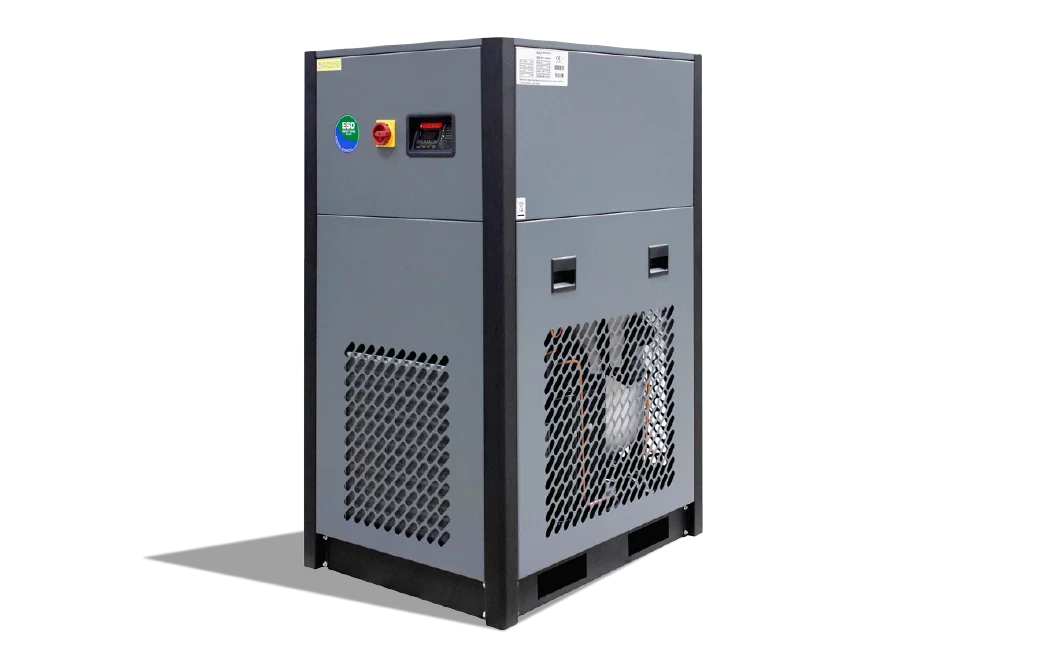
A dryer paired with an air receiver tank must be selected using the actual compressor delivery and the applicable rating conditions. Ask for the dryer model and any corrections used for inlet temperature, ambient conditions and working pressure. The refrigerated-dryer photograph below illustrates a supporting component; it does not specify the dryer required for every receiver volume or confirm an included package.
Include condensate handling in the air receiver tank discussion. Ask which drains and collection arrangements are proposed and who maintains them. Describe the relevant access and operating conditions so routine tasks can be planned. The dryer-controller illustration is a reference to supporting equipment checks, not a claim that the same controller or automatic functions are included with the standalone tank.

Air receiver tank installation and access worksheet
Give the supplier the proposed air receiver tank location and describe the access route, unloading restrictions and nearby equipment. Ask for the exact offered vessel’s dimensions and installation requirements. Identify who is responsible for positioning, supporting connections and any project works. A complete equipment price should not leave these responsibilities undefined between the supplier and the site team.
Keep routine access visible in the air receiver tank layout discussion. Ask how the identified accessories, connections and maintenance points will be reached in the proposed position. Use the equipment manufacturer’s documentation and the competent team’s assessment when reviewing the arrangement. This is a scope checklist, not an instruction to alter vessel fittings or perform unassessed pressure-system work.
Where production depends on continuous air, explain how air receiver tank installation or replacement will affect the operating system. Ask the project team to identify the planned isolation, connection and commissioning sequence and its responsibilities. State the acceptable production interruption window in the enquiry so the proposed scope can address continuity before equipment delivery.
Air receiver tank Malaysia price and handover record
Compare the air receiver tank Malaysia price using the same scope: exact vessel, identified accessories, available documents, delivery, unloading and commissioning responsibilities. Ask for the RM amount and applicable commercial terms beside that scope. A low tank-only price should not be compared directly with a complete installation offer that includes tasks and components excluded from the other quotation.
At handover, keep the air receiver tank identification, supplied documents, installed location and agreed project records together. Ask which routine inspections or maintenance responsibilities apply to the exact installation and who answers technical questions. The supplier’s offer and the competent team’s requirements should identify those responsibilities rather than this guide assigning a universal interval to every vessel.
Send the air receiver tank enquiry to +60 12 275 7317 with the proposed volume, required pressure, compressor delivery, demand event and Malaysia site location. If the volume is still an estimate, say so and request an assessment rather than presenting it as a confirmed selection. Include the dryer and installation scope where a complete package is required.
The measurement image below is a compressed-air audit reference. It illustrates the value of documenting the operating system when reviewing an air receiver tank enquiry. It is not a pressure-vessel inspection, a certificate, or a record of work at your site. Confirm any proposed inspection or assessment scope separately in the written project arrangements.

Frequently asked questions
What tank size is needed for a 22 kW or 55 kW compressor? Motor power alone cannot determine the correct volume. Provide airflow, controls, operating pressure and demand fluctuations for a selection assessment.
Should I choose vertical or horizontal? Compare the offered arrangements with available space, access, drainage and installation requirements. Confirm the dimensions of the exact tank.
Can a receiver replace a larger compressor? Stored air can support a short peak, but sustained demand still has to be met by the compressor system.
Request an air receiver tank quotation
Contact Vortex Compressors or call +60 12 275 7317. Include your Malaysia site location, intended capacity, working pressure and the existing compressor details. Confirm the proposed tank and documentation in the final quotation.
Air receiver tank: 7 essential buying checks
| Check | What to confirm for the proposed receiver |
|---|---|
| 1. Identity | Exact tank manufacturer, model or drawing reference and equipment identification. |
| 2. Capacity | Internal volume and the selection basis used for the operating requirement. |
| 3. Pressure | Working-pressure and design-pressure information for the proposed tank. |
| 4. Documents | Technical records and the applicable project documentation for the exact supplied equipment. |
| 5. Accessories | Gauge, relief device, drain, isolation and other included items. |
| 6. Layout | Dimensions, access, positioning, support and maintenance arrangements. |
| 7. Commercial scope | RM price, taxes, delivery, installation, warranty and confirmed availability. |
Use these checks to compare like-for-like proposals. A bare tank and an installed receiver assembly do not have the same scope. Mark accessories and documentation as included, excluded or provisional, and resolve any uncertain item before ordering.
An air receiver tank quotation should be tied to your site and operating requirement. State the available height and floor space, access for delivery and the location relative to the compressor and treatment equipment. Do not estimate handling or installation requirements from a catalogue photograph alone.
Explain the demand event the air receiver tank must support
For an intermittent machine, record how long the event lasts, how frequently it occurs and how much air it requires. For a shared factory header, identify the combinations of machines that operate together. These observations help the project team assess storage against the compressor’s response and the permitted pressure variation.
A short peak and a sustained production demand should be assessed separately. Storage can support an event for a limited period, but the compressor system still has to restore that stored air. The proposed arrangement should account for the frequency of events and the recovery period.
If the enquiry comes from a pressure complaint, explain where the pressure was measured and which task was running. A local hose, regulator or filter restriction can create a different problem from a shortfall across the whole air network. Increasing tank volume without assessing the cause may leave the complaint unresolved.
Compare an air receiver tank before or after air treatment
Describe whether the process requires stored air downstream of a dryer and filters or whether the receiver sits upstream of treatment. These arrangements have different positions in the system. The project team should assess air quality, condensate handling and pressure losses when selecting the layout.
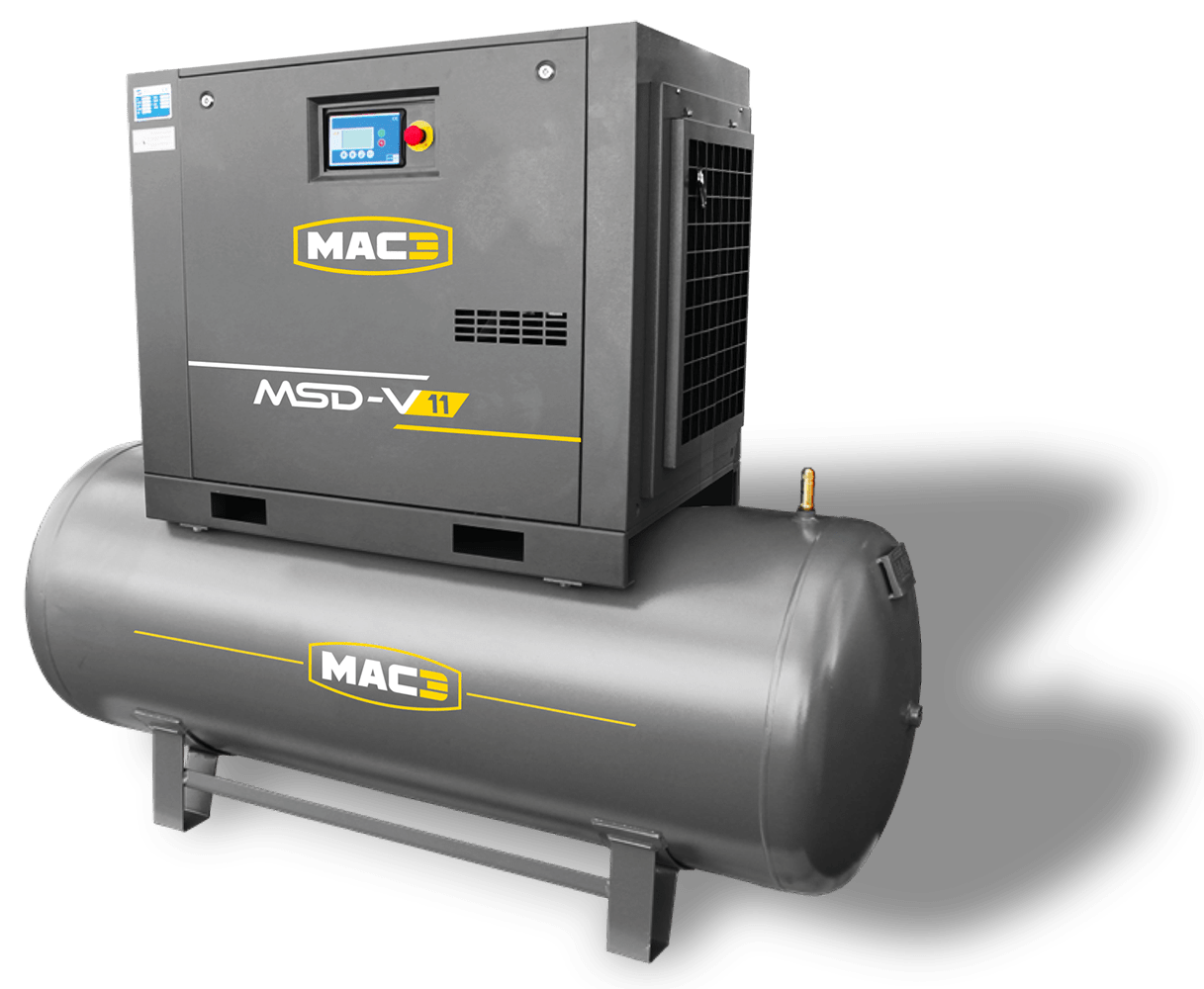
A tank-mounted compressor package and a standalone receiver also need different scope descriptions. If a package is offered, request separate identification of the compressor, receiver, dryer and filtration. Do not transfer the package’s tank volume to another compressor requirement without an assessment.
MAC3 publishes frame-mounted, tank-mounted and compact compressor configurations. This manufacturer reference illustrates the types of arrangement available in that range; it does not certify a standalone tank or determine the receiver volume required at your site.
Documents should identify the actual supplied equipment
Ask for documents that can be matched to the proposed receiver’s identification and technical offer. A generic manufacturer catalogue can describe a range without establishing the construction or approval status of the exact tank being supplied.
The applicable Malaysian requirements should be confirmed for the exact equipment and installation by the supplier and competent project team. This selection guide does not interpret an unspecified tank’s approval status. The quotation should identify the documentation and any inspection or submission responsibilities included in the project scope.
The public Department of Occupational Safety and Health Malaysia website is an official starting point for locating the current relevant guidance. Confirm the requirements for the proposed equipment rather than treating a product caption or marketing description as evidence of compliance.
Plan condensate management and maintenance access
Ask how the receiver will be drained and how the supplied drain arrangement will be accessed for inspection and service. Include the route for collecting or treating compressor condensate in the system discussion. Access to the receiver and its accessories should be considered before its position is fixed.
Identify the maintenance information that will be provided at handover. Confirm which party is responsible for routine inspections, servicing and applicable records. Follow the supplied technical instructions and competent service procedures; this guide is a purchasing checklist rather than an operating or pressure-vessel maintenance procedure.
Make the complete Malaysia quotation comparable
State receiver volume, pressure requirements and the existing compressor details in the enquiry. Ask each offer to identify the tank, accessories, delivery, positioning, connections and the included documents. Compare taxes, validity, payment terms, warranty and lead time in Malaysian ringgit.
For work in an operating factory, discuss how the system will be isolated and how production requirements will be managed during installation by the competent project team. The commercial scope should identify these responsibilities instead of leaving the tank price to stand for the entire project.
An air receiver tank enquiry becomes more useful when it includes the purpose of the project: new installation, short-demand peak, system expansion or replacement of an existing receiver. Explain that purpose alongside the technical information so the proposal can address the actual requirement.