
Compare air compressor sizes in Malaysia from 7.5 kW to 315 kW. Use this guide to organise a workshop or factory enquiry, compare kW and approximate HP labels, and identify the performance data needed for a quotation. These are selection guides, not a statement that every power class is currently in stock.
Start with airflow and pressure
List the connected equipment and identify which machines operate together. Record required pressure at the point of use and air consumption in CFM or m³/min. Separate continuous demand from short peaks. If replacing a compressor, provide the nameplate, working hours and pressure complaints.
Motor power is a useful way to browse equipment, but two machines with the same kW rating can deliver different airflow at the same pressure. Request the manufacturer’s free air delivery and package input power at your operating point before choosing a size.
Air compressor sizes: electric screw selection guides
| Motor class | Approximate HP | Selection topic |
|---|---|---|
| 7.5 kW | 10 HP | Workshop tool demand |
| 11 kW | 15 HP | Expanding a workshop air system |
| 15 kW | 20 HP | Shared workshop and assembly air |
| 18.5 kW | 25 HP | Planning for an added production cell |
| 22 kW | 30 HP | Factory air for mixed machine loads |
| 30 kW | 40 HP | Extending an existing distribution network |
| 37 kW | 50 HP | Multiple production machines on one header |
| 45 kW | 60 HP | Comparing intermediate factory capacity |
| 55 kW | 75 HP | Long operating hours and total running cost |
| 75 kW | 100 HP | A central compressor-room upgrade |
| 90 kW | 120 HP | Duty and standby planning |
| 110 kW | 150 HP | Shift-based central air demand |
| 132 kW | 180 HP | Compressor-room heat and ventilation |
| 160 kW | 215 HP | Network capacity and production resilience |
| 185 kW | 250 HP | Avoiding confusion between motor power and CFM |
| 200 kW | 270 HP | Comparing one large unit with staged capacity |
| 220 kW | 295 HP | Controlling operating cost across a large plant |
| 250 kW | 335 HP | Planning a major compressor replacement |
| 280 kW | 375 HP | Matching a less common power class |
| 315 kW | 420 HP | Engineering the complete large-capacity system |
HP figures are approximate power equivalents. Suppliers may use different nominal HP class names; the actual motor nameplate and offered model datasheet take precedence. A motor rating does not establish free air delivery.
Workshop, factory and central air-system enquiries
For workshop projects, begin with the tools, operating sequence and number of work bays. Include hoses and regulators when investigating pressure drops. For production lines, record air use during machine cycles and simultaneous operation. For central systems, provide shift demand, the compressor sequence and requirements during planned maintenance.
The guides cover smaller sizes such as 7.5 kW / 10 HP, 15 kW / 20 HP and 22 kW / 30 HP, as well as 55 kW / 75 HP and 75 kW / 100 HP factory enquiries. Larger power classes require a coordinated assessment of demand, electrical capacity, ventilation and air treatment.
Fixed speed or variable speed drive
Compare control options with the operating profile. Fixed-speed machines and VSD machines have different behaviour under changing demand. Ask how the proposed equipment will run at minimum, normal and peak load. See the 5–15 kW MAC3 VSD range and 18.5–315 kW MAC3 VSD range.
Price and package comparison in Malaysia
Request pricing in Malaysian ringgit with the model, taxes, delivery and warranty terms stated. Compare compressor-only offers separately from complete packages. An air dryer, receiver, filters, drains, piping and commissioning can change the project scope substantially.
- Required airflow and pressure, supported by measurements or equipment data.
- Operating hours, shift pattern and demand variation.
- Site location, room layout, access and available electrical supply.
- Dryer, filtration and receiver requirements.
- Installation responsibilities, commissioning, service arrangements and lead time.
Electric kW classes and portable diesel CFM classes
Stationary electric compressors are commonly browsed by motor power; portable diesel compressors are often browsed by airflow. These units describe different properties. A 185 kW machine is different from a 185 CFM portable compressor. View the diesel compressor guide for construction-site enquiries.
Request a compressor quotation
Send your requirements to Vortex Compressors or call +60 12 275 7317. Include your Malaysia site location so delivery, installation and after-sales support can be scoped. The final quotation confirms the exact brand, model, performance and availability.
Air compressor sizes: three practical pressure comparisons
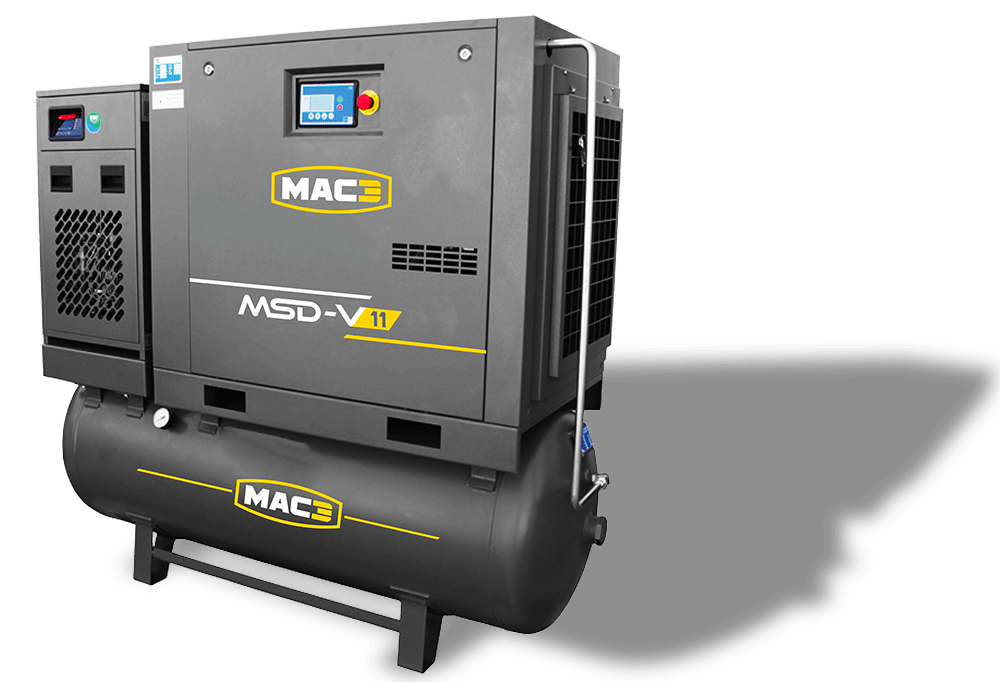
Use these examples to understand how air compressor sizes are compared. The stated demand figures are illustrative, not measurements from a customer’s factory. The MAC3 airflow figures are the reviewed frame-mounted MSD-V catalogue references at 10 bar. They provide a basis for shortlisting; the final offer must assess the actual duty, treatment losses, controls and installation conditions for the supplied model.
For a small workshop, suppose the documented process requirement is 1.00 m³/min at 10 bar. The published upper figure for MSD-V 7 is 1.20 m³/min, while MSD-V 11 is 1.67 m³/min. These air compressor sizes describe different output envelopes. Neither comparison alone establishes the correct purchase: the workshop must also describe simultaneous tool demand, the operating pattern and the pressure actually required at the tools.
When comparing those air compressor sizes, keep the minimum flow range visible. MSD-V 7 lists 0.43–1.20 m³/min at 10 bar and MSD-V 11 lists 0.55–1.67 m³/min. Explain how often the workshop operates at low demand and ask how the proposed controls handle that duty. A larger maximum figure does not describe unloaded operation, treatment equipment or the whole working week.
For mixed factory production, an illustrative sustained demand of 3.50 m³/min at 10 bar can be compared with MSD-V 22’s upper reference of 3.80 m³/min and MSD-V 30’s 4.60 m³/min. These air compressor sizes correspond to 22 kW / 30 HP and 30 kW / 40 HP catalogue labels. Ask the proposal to explain its allowance for actual process conditions rather than selecting a motor class from this arithmetic alone.
For a central factory header, compare an illustrative demand of 10.00 m³/min at 10 bar with the published ranges of MSD-V 55 and MSD-V 75. Their upper references are 8.20 and 10.90 m³/min respectively. The smaller reference cannot demonstrate that it serves that stated sustained duty. The larger reference still requires a complete assessment before it can support an equipment recommendation. This is why air compressor sizes must be read with pressure and demand.
Air compressor sizes and the existing equipment
Before changing air compressor sizes, list the compressors already connected to the plant and record their model, pressure, operating role and service condition. Identify which will remain in use. The supplier needs that context to assess a single replacement, an additional unit or a staged arrangement. A new machine should be considered with the retained controls and distribution system rather than as an isolated motor rating.
Describe the air compressor sizes required for normal production separately from any standby expectation. Explain whether every process must continue when one machine is unavailable or only essential processes. Identify those essential loads in the enquiry. Standby capacity should be assessed against the delivered-air requirement; adding motor-power labels together does not establish production continuity.
If an enquiry starts with a less common rating, keep that requirement explicit. The reviewed MSD-V table lists documented classes including 160, 200, 250 and 315 kW, but does not provide exact 185, 220 or 280 kW entries. Those air compressor sizes remain enquiry classes in this guide. Ask for an exact-model offer where the rating is mandatory, or permission to compare documented alternatives where performance determines selection.
Air compressor sizes: build a comparable Malaysia quotation
Request the shortlisted air compressor sizes at the same working pressure and with the same package boundary. Identify the dryer, receiver, filters, drains, delivery and commissioning scope beside each model. A compressor-only price and a complete-system price answer different questions. Ask for the RM amount, applicable taxes, warranty terms and supply schedule to be tied to the exact written scope.
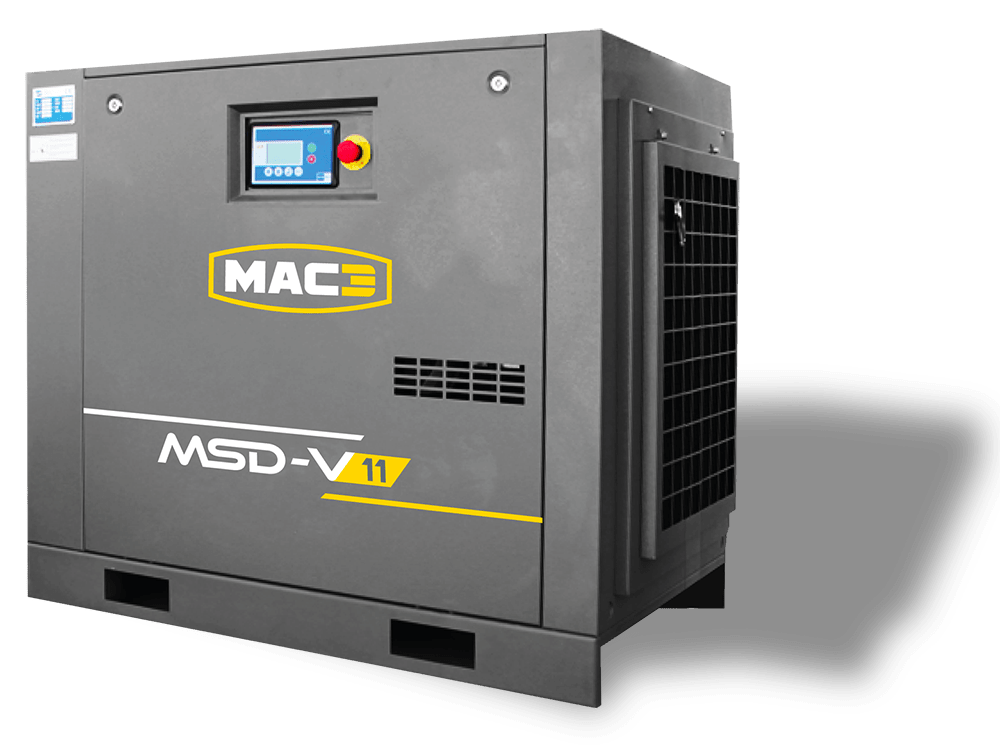
Keep the technical and commercial comparison together when reviewing air compressor sizes. Mark electrical connections, piping, ventilation and unloading responsibilities as included, excluded or a defined project task. Use the exact model’s installation documentation for access and cooling requirements. A photograph or another model’s drawing cannot establish that the offered equipment fits the proposed room.
Describe the site location in Shah Alam, Selangor, Kuala Lumpur or elsewhere in Malaysia and identify any access restrictions. For larger air compressor sizes, explain how installation work will be coordinated with production and retained equipment. Ask the project team to identify the connection, test and handover sequence before the order is treated as a complete installation arrangement.
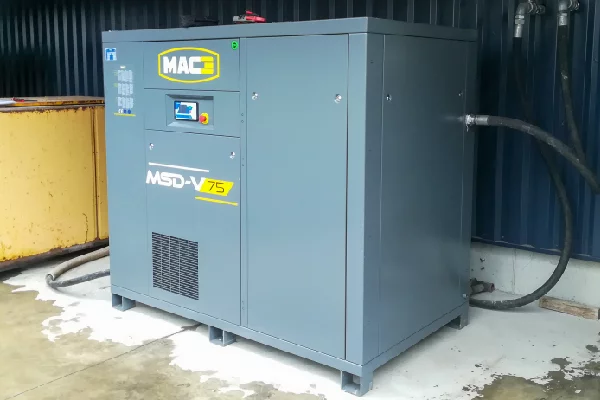
A 75 kW / 100 HP enquiry may be the correct commercial starting label for a central plant, but the supporting MSD-V 75 photograph is a model example rather than proof of local stock or a completed Malaysia installation. When choosing air compressor sizes, keep the equipment photograph, model code and written performance data consistent. Confirm the delivered configuration in the quotation.
Air compressor sizes: measurement and handover checklist
Prepare a demand record before finalising air compressor sizes. Give each machine or process its own entry with required pressure, consumption information, typical cycle and overlap with other equipment. Mark measured information separately from estimates and nameplate references. Record the busiest sustained period and the lowest normal demand so the controls recommendation can address more than a single peak.
Pressure complaints should be described alongside the air compressor sizes enquiry. Explain where the symptom occurs, which processes are operating and whether the whole network is affected. Ask the competent service team to assess the relevant components. A low reading at one outlet can require a different investigation from a system-wide supply concern, so do not assume that increasing the motor rating resolves either situation.
Agree what will be recorded when the chosen air compressor sizes are installed: exact equipment identities, selected pressure, supporting treatment, site location and commissioning date. Keep the manuals, service schedules and supply scope with the record. Confirm who receives fault reports and how technical questions or sourced replacement components will be handled after handover.
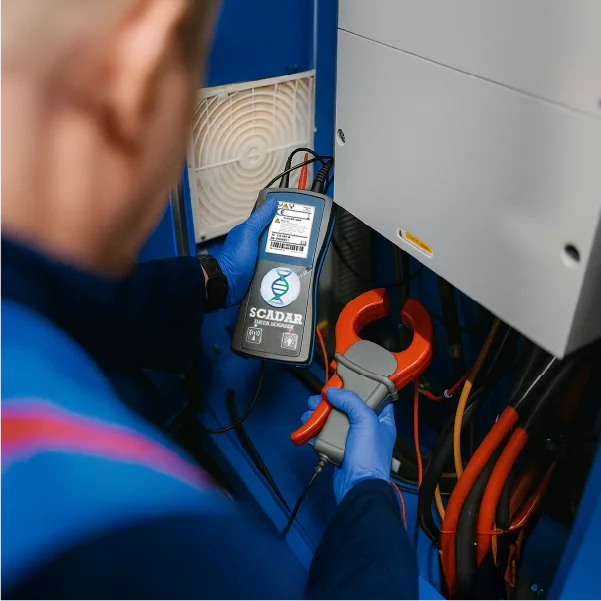
Send your air compressor sizes enquiry to +60 12 275 7317 with the required pressure, airflow information, operating schedule, site location and intended package scope. Include the existing machine’s nameplate if replacing equipment. The measurement photograph below is an audit reference, not evidence that your site has already been inspected or that a free inspection is included.
Air compressor sizes: published MAC3 references
Use the following model references to compare motor classes with delivered-air requirements. The airflow shown is the published upper end at 10 bar for the specified MSD-V model, not a universal output for every compressor using the same kW rating. Other pressures and platforms have separate data.
| MAC3 reference | Motor class / catalogue HP | Upper airflow at 10 bar | Approximate CFM at 10 bar |
|---|---|---|---|
| MSD-V 7 | 7.5 kW / 10 HP | 1.20 m³/min | 42 |
| MSD-V 11 | 11 kW / 15 HP | 1.67 m³/min | 59 |
| MSD-V 15 | 15 kW / 20 HP | 2.15 m³/min | 76 |
| MSD-V 18 | 18.5 kW / 25 HP | 2.60 m³/min | 92 |
| MSD-V 22 | 22 kW / 30 HP | 3.80 m³/min | 134 |
| MSD-V 30 | 30 kW / 40 HP | 4.60 m³/min | 162 |
| MSD-V 37 | 37 kW / 50 HP | 5.80 m³/min | 205 |
| MSD-V 45 | 45 kW / 60 HP | 6.80 m³/min | 240 |
| MSD-V 55 | 55 kW / 75 HP | 8.20 m³/min | 290 |
| MSD-V 75 | 75 kW / 100 HP | 10.90 m³/min | 385 |
| MSD-V 90 | 90 kW / 125 HP | 14.40 m³/min | 509 |
| MSD-V 110 | 110 kW / 150 HP | 17.30 m³/min | 611 |
| MSD-V 132 | 132 kW / 180 HP | 20.30 m³/min | 717 |
| MSD-V 160 | 160 kW / 220 HP | 24.60 m³/min | 869 |
| MSD-V 200 | 200 kW / 270 HP | 32.30 m³/min | 1141 |
| MSD-V 250 | 250 kW / 340 HP | 38.50 m³/min | 1360 |
| MSD-V 315 | 315 kW / 430 HP | 44.30 m³/min | 1564 |
Sources: MAC3’s 5–15 kW frame-mounted MSD-V table and 18.5–315 kW MSD-V table. CFM figures are rounded unit conversions using approximately 35.3147 CFM per m³/min. Confirm the exact equipment, current data and availability in the quotation.
Distinguish catalogue models from enquiry classes
The site includes guides for 185, 220 and 280 kW enquiries, but those exact ratings are not listed in the reviewed MSD-V table. Their pages compare nearby published options and explain how to confirm the exact offered model. They should not be read as announcements that an unidentified MAC3 machine is in local stock.
Motor HP labels also differ between suppliers and platforms. For example, a 132 kW enquiry may be described using a 175 HP class in some Malaysia listings, while the MAC3 reference uses 180 HP. Compare actual model performance and the nameplate rather than assuming the labels establish identical equipment.
A practical worksheet for comparing air compressor sizes
| Requirement | Information to collect |
|---|---|
| Connected equipment | Machine and tool details, manufacturer consumption figures and working pressure. |
| Simultaneous operation | Which loads overlap, how long peaks last and which tasks run continuously. |
| Working week | Production shifts, breaks, cleaning, weekend loads and shutdown. |
| Pressure observations | Compressor-room and point-of-use readings during the relevant task. |
| Existing installation | Compressor nameplates, dryers, filters, receivers, pipework and service records. |
| Project scope | Retained equipment, new machines, continuity requirements and installation responsibilities. |
Use measured data where available. If the enquiry begins with estimates, label them as estimates and ask which readings are needed to finalise the equipment selection. A long list of motor sizes is less useful than a clear description of the duty the new system must cover.
Why a larger motor may not resolve a pressure complaint
Pressure loss can involve the distribution network, filters, regulators and tool connections as well as compressor capacity. Describe whether the problem affects one machine or the entire system and identify the production conditions when it occurs.
Ask the competent service team to distinguish a sustained capacity shortfall from a short peak or local restriction. The resulting proposal may involve compressor capacity, control changes, treatment equipment, storage or distribution work. This guide does not prescribe one solution without those observations.
Compare package cost and operating assumptions
An equipment-only offer and a complete installation offer can have very different scopes. Ask each supplier to identify the exact model, air treatment, receiver, delivery, electrical work, pipework and commissioning included. Compare the RM quotation with the same scope and technical requirements.
For electricity comparisons, use measured or appropriately quoted average package input power, operating hours and applicable tariff components. Motor nameplate power alone is not a complete electricity-cost measurement. Any projected saving should identify the comparison machine and the operating scenario.
Installation, commissioning and production continuity
Provide the proposed equipment location, access route, room arrangement and available electrical supply. Ask for the manufacturer’s installation requirements for the offered model. Supporting equipment should be checked against airflow, pressure and process air-quality requirements.
If production depends on continuous compressed air, agree how air will be supplied during installation and maintenance. Confirm commissioning checks, handover documents and service arrangements in the offer before ordering. Neither a supplier’s general catalogue nor another site’s installation establishes the complete scope for your factory.