
Portable Air Compressor Overheating: Checks Before Service
Portable air compressor overheating needs the actual alarm and machine details before a cause can be identified. Engine coolant temperature, compressor discharge temperature and other controller warnings are different information. Record the displayed message rather than treating every shutdown as the same fault.
This guide helps Malaysian site teams prepare a clear service enquiry using non-invasive observations and existing records. It does not provide a universal alarm threshold, restart procedure or permission to work on a hot or pressurised machine.
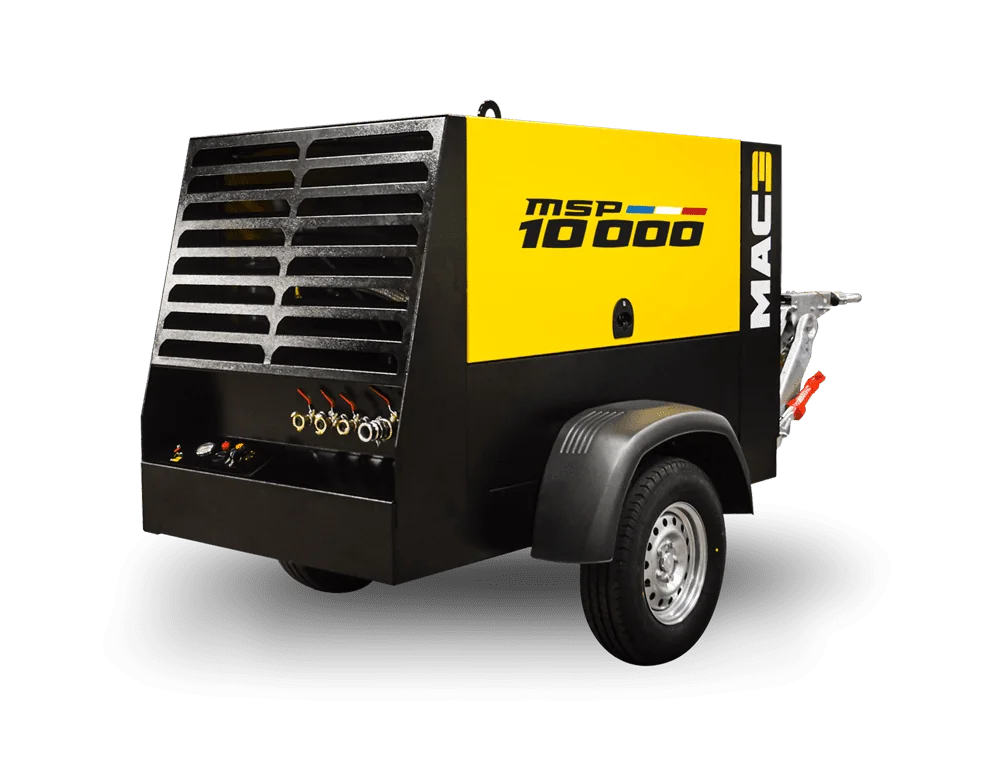
MAC3 MSP10000 model reference; consult the documents for the actual machine and engine.
On this page
Alarm · History · Cooling-air path · Fluid history · Air duty · Service handover
1. Identify the portable air compressor overheating warning
Follow the shutdown and emergency instructions supplied for the machine and the observed condition. Keep people clear of steam, hot discharge, moving parts and pressurised components. Do not repeatedly reset an alarm or bypass a protective device to continue working.
The MAC3 MSP11000/12000 Stage V manual describes engine cooling, compressor-oil cooling and temperature protections. That distinction is useful when describing a fault, but its settings and procedures must not be assumed to apply to a different model or engine version.
2. Preserve the fault message and operating history
Record the model, serial number, engine identification and hour reading. If safe to obtain from the normal operating position, photograph the displayed fault and note when it appeared. Record whether the machine had just started, was idling or was supplying its normal air load.
For a portable air compressor overheating enquiry, include previous occurrences and recent work. Tell the technician about filter or fluid changes, cleaning, repairs, transport and changes in the connected equipment. Separate what someone observed from a suspected diagnosis.
3. Describe the cooling-air path without opening the machine
From a safe position, report visible obstruction around the normal cooling-air inlet or outlet, nearby hot exhaust and heavy dust accumulation. Do not remove guards or reach into the machine to investigate. The technician should determine the necessary inspection and cleaning under the approved isolation procedure.
Atlas Copco’s mobile-compressor service guidance highlights the role of clean coolers and filters. Its product-specific fluids and service recommendations are not interchangeable with another manufacturer’s instructions.
4. Provide fluid and cooling-system service history
Report known leaks and the fluids last added, including their specifications and dates where recorded. Do not open hot radiator caps, separator caps or pressure-retaining components. Checks requiring access, topping up or dismantling belong with trained personnel following the actual instructions.
The manufacturer’s general troubleshooting reference includes low oil level and insufficient cooling air among possible causes of elevated temperatures. Those are possibilities for assessment, not a diagnosis of your machine.
5. Report the connected air duty and recent changes
State the required working pressure, connected tools or nozzles, operating hours and any recent changes to hoses or treatment equipment. Note the pressure shown when the fault appeared if it was safely recorded. Do not increase pressure or modify controls as a trial fix.
If portable air compressor overheating began after a duty change, send the previous and current equipment schedules. Our sandblasting airflow guide explains why a nozzle or pressure change belongs in the operating-demand review. It does not diagnose a cooling fault.
6. Arrange a documented service handover
- Machine and engine identification, current hour reading and actual site address.
- Exact alarm text or code and safely obtained photographs.
- Observed operating state, temperatures shown and air-pressure readings, if recorded.
- Recent service, fluid, filter, site-position or connected-load changes.
- Known leaks, repeated shutdowns and any action already taken.
- Access arrangements and the person responsible for isolating the equipment.
Ask the technician to separate the reported symptoms, confirmed findings and proposed repair. A portable air compressor overheating assessment may need more than one check; replacing a component without a confirmed cause is not a complete diagnostic plan.
Should I reset a high-temperature alarm and keep working?
Do not repeatedly reset or bypass a protection. Follow the actual machine instructions and have the condition assessed before a restart is authorised.
Is there one normal shutdown temperature for all compressors?
No universal figure is given here. The relevant measurement, protection threshold and response depend on the actual machine, engine and controller configuration.
Send a portable air compressor overheating service enquiry
Use the compressor repair enquiry page or WhatsApp +60 12-275 7317. Include the machine details and the site address so scope, attendance and timing can be confirmed. For replacement equipment, see the portable diesel range.
References checked 18 October 2026. Use the supplied instructions and qualified service support for operation, isolation, diagnosis and repair.