
Portable Diesel Compressor Maintenance Checklist for Malaysia
Portable diesel compressor maintenance should follow the compressor and engine documents supplied for the actual machine. Begin with the model, serial number, engine version and hour-meter reading. A general checklist helps organise the work; it does not replace the applicable intervals, parts references or authorised service procedures.
This guide concerns mobile diesel packages used on Malaysian construction and industrial sites. It focuses on service planning, records and information for the technician, rather than repeating a factory compressor-room or humidity checklist.
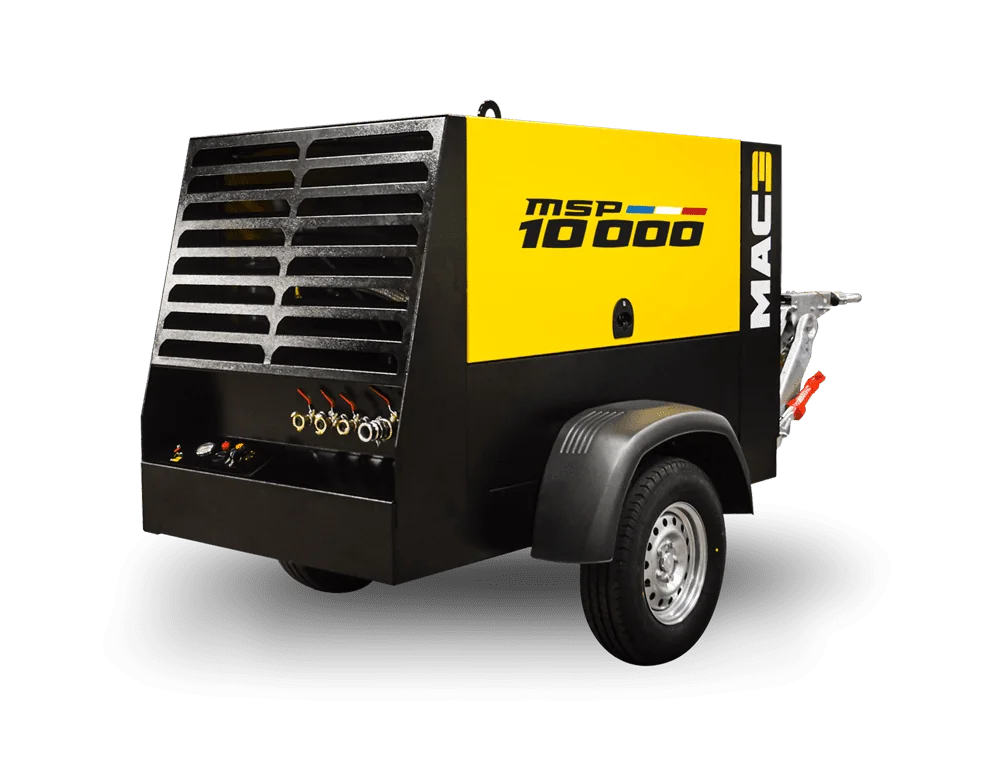
MSP10000 model reference. Confirm service documents and parts against the identification of the machine being maintained.
On this page
Documents · Condition · Schedule · Parts · Site conditions · Transport equipment · Records
1. Start portable diesel compressor maintenance with the right documents
Record the compressor and engine identification separately. Retain the operator manual, engine manual and maintenance plan with the equipment record. Confirm the applicable document revision before ordering a kit or transferring a schedule from another machine.
MAC3’s spare-parts guidance states that machines have maintenance plans with specified replacement intervals. Use that machine-specific plan rather than a blanket interval taken from an unrelated compressor or a general online article.
2. Record condition before handing the machine into service
Have trained personnel perform the checks allowed by the supplied instructions. Record visible leakage, damaged hoses, missing or damaged guards and warning indications. A photograph should identify the location of an issue without requiring someone to approach moving or pressurised components.
The MSP11000/12000 Stage V manual includes pre-start checks and separate maintenance instructions. It is a reference for those models, not a universal schedule for every MSP range. Abnormal conditions should be assessed before further operation.
3. Build a schedule from operating hours and calendar requirements
List each service item from the applicable plans, its last completion date and hour reading, and the next due point. Where the manufacturer gives both elapsed time and operating hours, apply its stated rule. Keep engine, compressor, treatment equipment and transport-component requirements distinguishable.
For portable diesel compressor maintenance planning, assign an owner for recording hours and booking the work. A machine moving between sites needs one continuous record, not a fresh schedule at every delivery. Record idle periods and storage arrangements where the instructions require them.
4. Match parts and fluids to the exact build
Send the identification details and existing part references with a request for filters, lubricant or service kits. Ask the supplier to confirm the kit contents and which scheduled operation it covers. Do not assume an engine kit also contains all compressor-side parts.
MAC3 describes maintenance kits as a way to organise model-specific service components. The actual proposed kit still needs identification and scope checks. Record approved fluid specifications and avoid substitutions based only on viscosity labels or a similarly named product.
5. Report dust, cooling-air access and operating conditions
Tell the service provider whether the compressor works near blasting, drilling, road dust or other airborne contamination. Include observations about blocked cooling-air paths and nearby sources of hot air. Have cleaning and inspection performed using the methods and isolation requirements specified for the machine.
Atlas Copco’s mobile-compressor summer service guidance discusses filters, coolers and operating conditions. It is a general technology reference, not approval to use another brand’s lubricant or maintenance interval on a MAC3 machine.
Review the site information with the supplier when planning portable diesel compressor maintenance. Do not invent shorter service intervals or alter protection settings without the appropriate manufacturer or service guidance.
6. Include trailer, chassis and optional equipment
Identify whether the supplied machine uses a skid, trailer or other mounting. Keep the relevant chassis and transport documents with the compressor record. Report damage and maintenance needs for fitted lighting, tyres, braking or coupling equipment to the responsible competent person.
Also list optional coolers, separators, dryers, hose reels or other supplied accessories. Their presence can introduce separate service requirements. A photograph of a catalogue configuration does not establish what is fitted to your machine.
7. Keep portable diesel compressor maintenance records together
| Record | Information to retain |
|---|---|
| Machine | Model, serial, engine identification and site |
| Service event | Date, hour reading, work completed and technician |
| Materials | Confirmed part references, quantities and fluid specifications |
| Follow-up | Outstanding faults, next due point and responsibility |
Ask the service record to distinguish completed work, observations and recommended follow-up. Keep supporting invoices, inspection findings and any manufacturer updates with the same record. Service attendance, response times and warranty decisions should be confirmed for the actual offer and circumstances.
Can I apply one interval to every portable diesel compressor?
Use the maintenance plan for the actual compressor, engine and fitted accessories. Model names, engine versions and operating conditions can differ.
Is an engine service the complete compressor service?
Not necessarily. The written scope should identify engine-side, compressor-side, treatment and transport-equipment work separately.
Request a portable diesel compressor maintenance proposal
Send the model, serial number, engine details, hour reading, service history and Malaysia site address through the maintenance enquiry page or WhatsApp +60 12-275 7317. For identified components, use the spare-parts enquiry guide.
References checked 18 October 2026. This is a planning checklist; service execution follows the actual machine and engine instructions.